All work

Creative ops · art direction

Status: Shipped client work

Leading a creative team

Art Director across two businesses: hired and mentored seven designers and kept 30–40 projects moving at peak.

Client
FCI Promos
Role
Art Director
Team
7 designers hired and mentored
Scope
Brand, marketing, screen-print production
Partners
Owners, executives, production staff
Original brand work is unavailable; boards shown use fictional briefs.
The problem
A marketing brand and a screen-printing operation needed consistent creative, a developing team and dependable production.
My part
Art Director with final creative approval. Hired and mentored the team, and presented direction to owners and executives.
Result
Seven designers hired and mentored, 30–40 projects moving at peak, and creative direction presented to owners and executives.
Why it mattered
Both businesses depended on this work for their identity and online presence, and production staff had to be able to make whatever was approved.
The main decision
A path from new hire to owner. Instead of a sink-or-swim start on live production work.
What I took from it
Make the standard understandable, then hand over ownership.
7
designers hired, trained and mentored
30–40
projects in flight at peak
2
businesses under one creative direction

Two brands, high volume

  • New designers needed a path to ownership
  • Dozens of projects competing for attention
  • Quality had to survive the deadline

The decisions

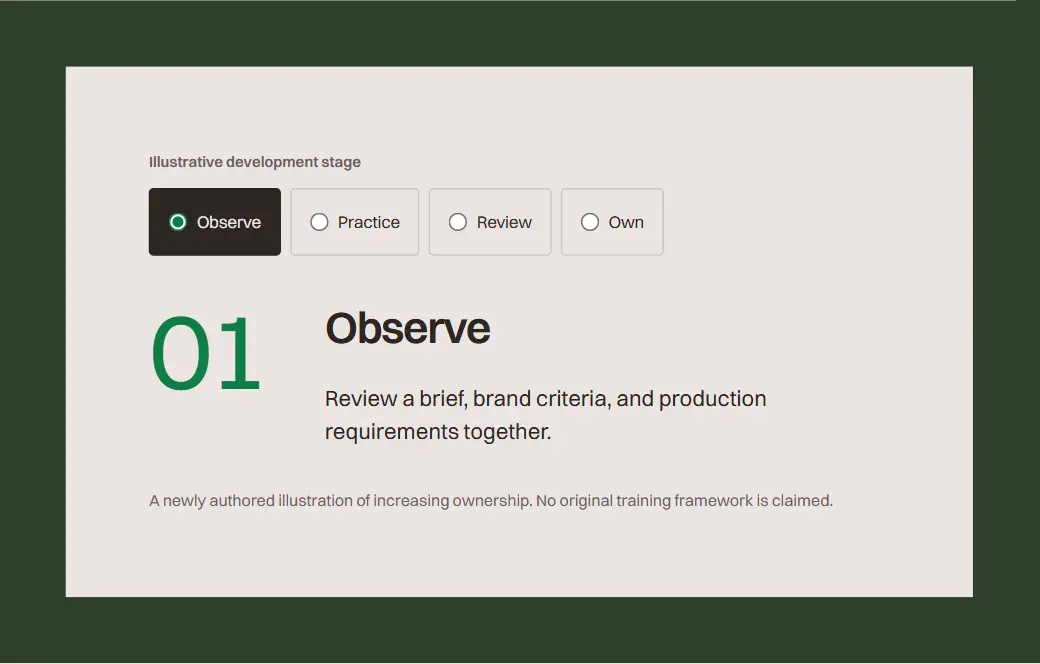
A path from new hire to owner

Designers moved from observing standards to owning production as they showed readiness.

Instead of a sink-or-swim start on live production work.

Illustrative design evidenceConceptual reconstruction / fictional data
Illustrative development stage
01

Observe

Review a brief, brand criteria, and production requirements together.

A newly authored illustration of increasing ownership. No original training framework is claimed.

A board that shows what is stuck

A blocked production dependency changes the next action for the whole team.

Instead of a status meeting to find out what is blocked.

Illustrative design evidenceConceptual reconstruction / fictional data
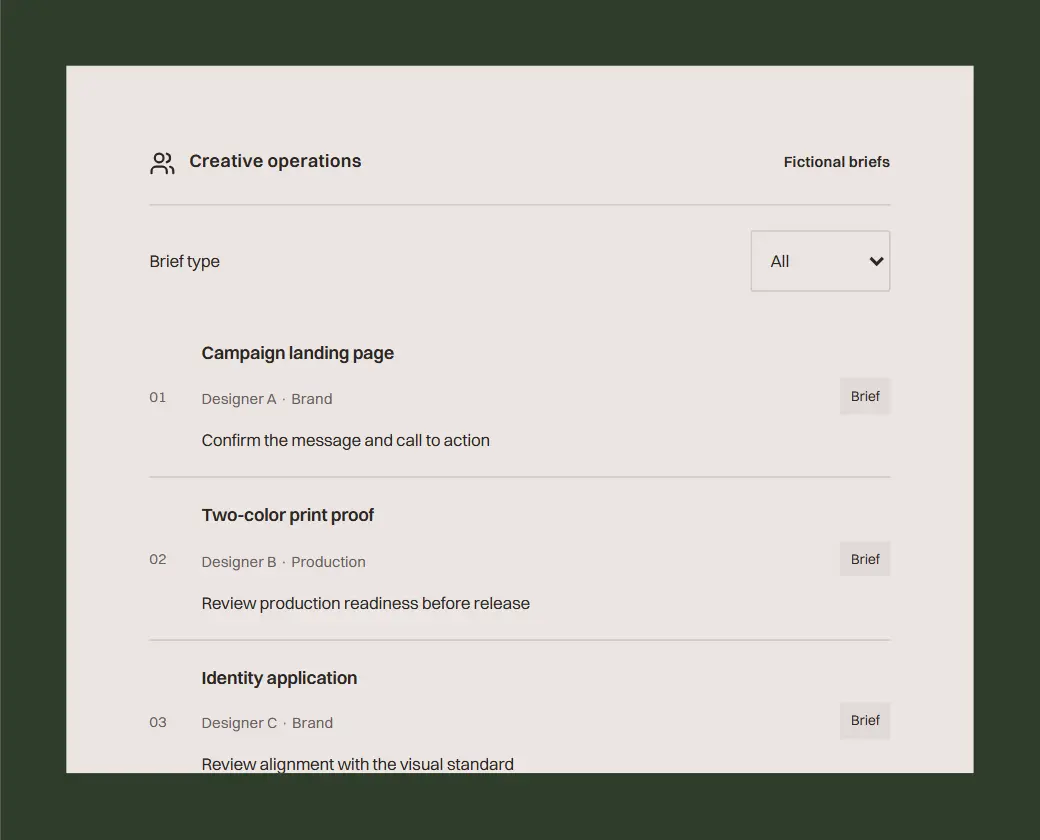
Creative operationsFictional briefs
  • 01
    Campaign landing pageDesigner A · Brand

    Confirm the message and call to action

    Brief
  • 02
    Two-color print proofDesigner B · Production

    Review production readiness before release

    Brief
  • 03
    Identity applicationDesigner C · Brand

    Review alignment with the visual standard

    Brief

Campaign landing page: Brief. Local illustration; no company records are changed.

Critique with criteria

Reviews named the brief, the brand and the production rule, so feedback carried to the next job.

Instead of feedback based on personal taste.

Illustrative design evidenceConceptual reconstruction / fictional data
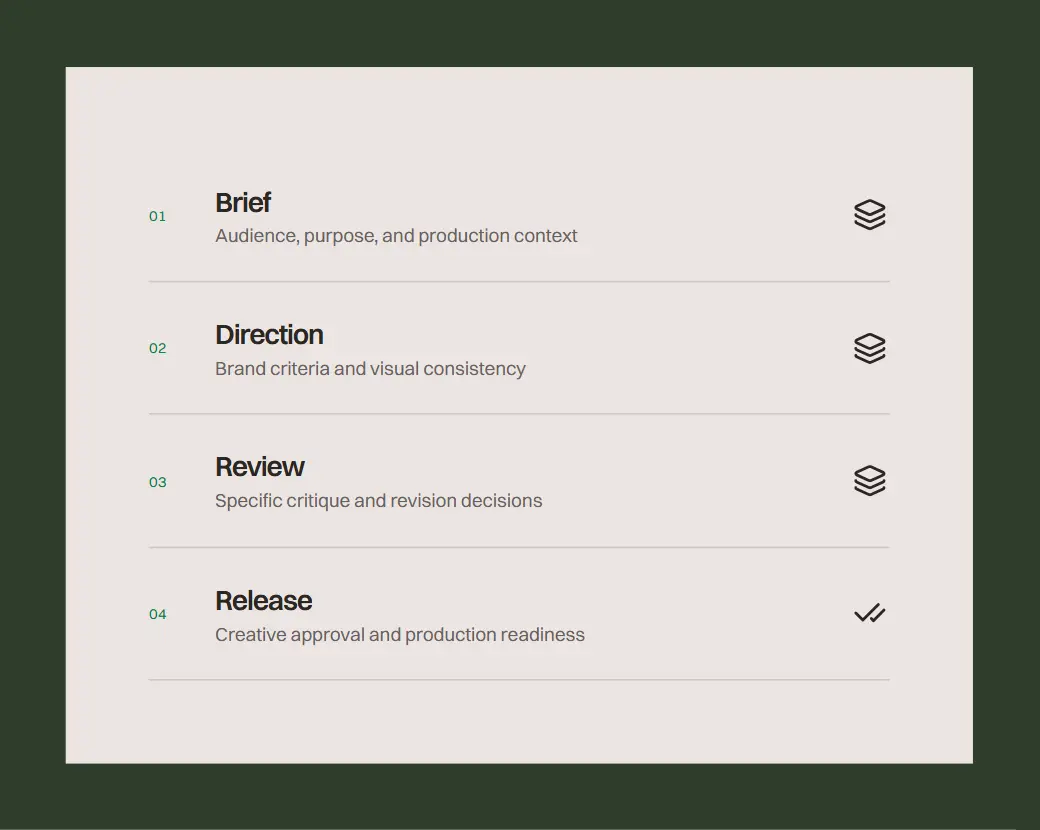
  1. 01

    Brief

    Audience, purpose, and production context

  2. 02

    Direction

    Brand criteria and visual consistency

  3. 03

    Review

    Specific critique and revision decisions

  4. 04

    Release

    Creative approval and production readiness

How this work fits my practice

This work adds evidence of my broader background in visual design, delivery and ownership. My enterprise program case shows how I apply those skills across products and teams.

  • Visual design
  • Delivery
  • Ownership
The shipped programModernizing DoD workflows3 apps, 500+ users, 1–2 months to 1–2 weeks

What I owned

  • Interviewing, hiring and mentoring
  • Visual identity and creative strategy
  • Final creative approval
  • Executive presentations

Designers became owners

  • Seven designers hired, trained and mentored
  • 30–40 concurrent projects managed at peak
  • Creative direction presented to owners and executives

From sketch to shipped

The same screen at four stages, redrawn to show the progression. These are not recovered project files.

  1. Sketch

    A rough flow on paper: who does what, and in what order.

  2. Wireframe

    Structure before style. Every state gets a place.

  3. First build

    Real components and real data, rough edges included.

  4. Shipped

    Polished, tested and in people's hands.