
// Leadership · Operational brief
People,
alignment,
quality
I establish design direction, mentor designers and help engineers across departments adopt shared patterns. I stay close to discovery, implementation and delivery.
Leadership record
- 7Designers hired, trained and mentoredFCI Promos, 2017–2021. Seven over time, not seven at once.
- 3Designers managed on one DoD applicationUp to three, extending patterns I established.
- 30–40Concurrent projects at peakAcross two brands, with final creative approval.
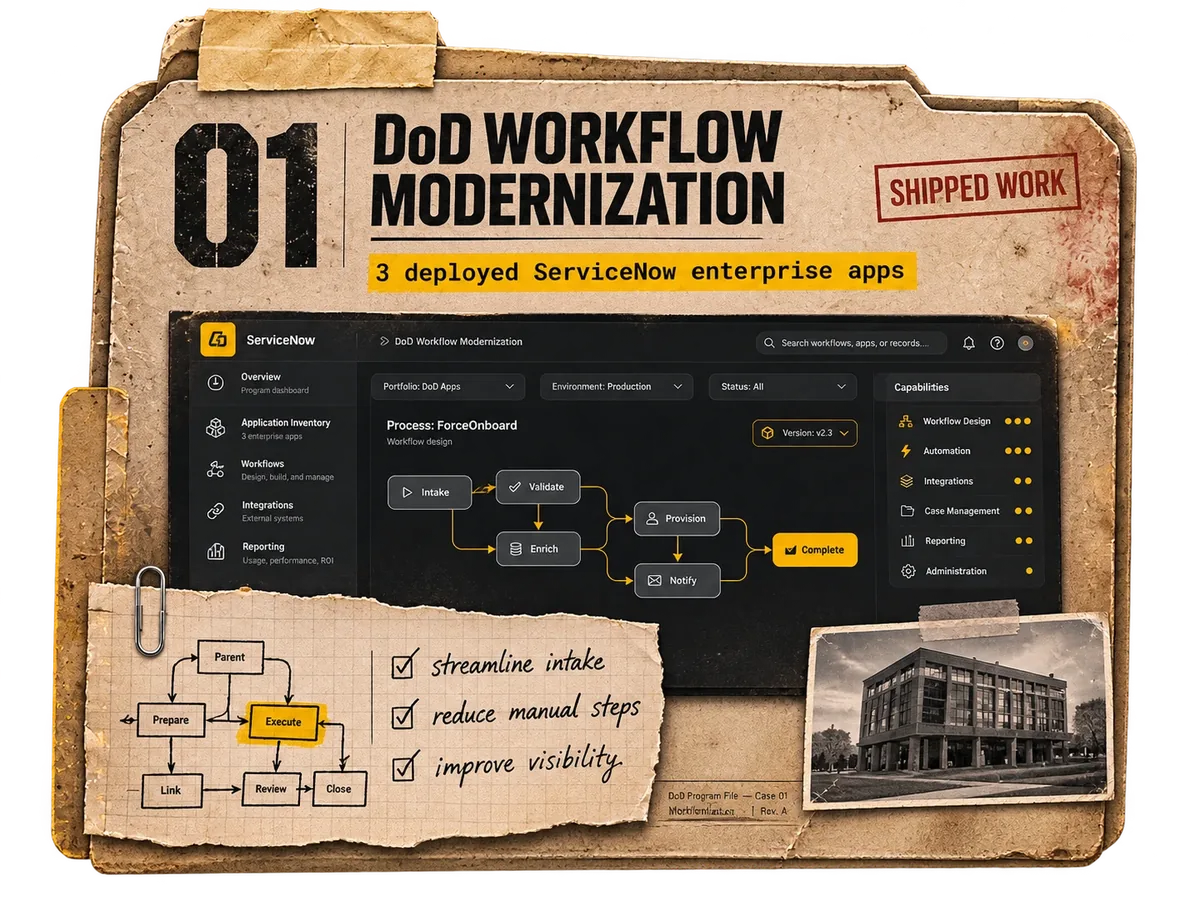
- 3Shipped DoD applicationsProgram leaders made the direction the standard for future apps in that program.
01 / Who was in the room · DoD program
Alignment board
Roles and how I worked with each on the three DoD applications. This is a map of working relationships, not a reporting chart.
BrianDesign direction
02 / Decision ledger
Decision briefs
Five leadership calls, summarized from the DoD and FCI case studies. Open one to see the problem, the alignment challenge, the call, its tradeoff and how it reached the people building it.
01 · DoDOne direction across three applications
- Problem
- Three applications, and engineers in other departments building pages that needed to look and behave alike.
- Alignment challenge
- Those engineers were not on my team and worked to their own schedules.
- Recommendation
- Shared visual guidelines, reusable designs and source code they could take, and walkthroughs on how to apply them.
- Tradeoff
- Direction stayed with one owner. Teams adapted pages inside the patterns instead of restyling them.
- How it moved to the builders
- Engineers requested the designs and code directly; program leaders later made the direction the standard for future apps.
02 · DoDGrow the team without splitting the direction
- Problem
- The largest application needed more pages than one designer could produce.
- Alignment challenge
- Contributing designers joined and left over time, and each needed to learn ServiceNow.
- Recommendation
- Contributors extend established patterns; I keep new record pages and major decisions, and mentor on the platform.
- Tradeoff
- New patterns moved through one person, so contributors extended rather than invented.
- How it moved to the builders
- Pages reached engineering in one consistent pattern set; I made the front-end revisions to hierarchy, states and access.
03 · DoDFaster assignment, asked for by the test group
- Problem
- The test group needed to assign work faster than the standard platform flow allowed.
- Alignment challenge
- Stakeholder requirements on visibility and process had to hold while steps were removed.
- Recommendation
- Fewer steps, quick selection, and bulk or group assignment.
- Tradeoff
- Going past ServiceNow defaults meant custom CSS and front-end code that someone has to maintain.
- How it moved to the builders
- I implemented it in custom CSS and front-end code, partnering with lead developers on the larger technical issues.
04 · FCIMove designers from observing to owning
- Problem
- New hires needed a route from learning the brand and production rules to owning work.
- Alignment challenge
- Quality had to hold while designers learned, and final approval was mine.
- Recommendation
- Explain the criterion behind every critique, then increase ownership as each designer shows readiness.
- Tradeoff
- I kept final approval, so ownership grew in steps rather than all at once.
- How it moved to the builders
- Work went to screen-print production once it met the brief, the brand and the production rule.
05 · FCI30–40 projects, one standard
- Problem
- At peak, 30–40 creative projects were in flight across two brands.
- Alignment challenge
- Work in progress, team readiness, production needs and approvals all competed for the same time.
- Recommendation
- Prioritize by production dependency and deadline. A deadline changes the priority, not the standard.
- Tradeoff
- Lower-priority work waited instead of shipping below the standard.
- How it moved to the builders
- Production staff received work that matched the brief and could be printed as designed.
03 / How I lead
Five working rules
- 01
Make decisions explicit
Tie every choice to the user task, the requirement and the tradeoff.
- 02
Hand over ownership
Clear briefs, feedback against criteria, more ownership as people grow.
- 03
Bring the builders in early
Engineering, QA and production review the decision before handoff.
- 04
Protect quality under pressure
A deadline changes the priority, not the standard.
- 05
Build what the next team reuses
Patterns that let people spend judgment on what is new.
04 / Two teams, two shapes
The evidence
- FCI Promos · 2017–2021Status: Shipped client work
Grow designers into owners
I hired seven designers and built a path from observing the standard to owning production, across two brands.
Read the case - Seneca Resources · EY · DoD · 2022–nowStatus: Shipped client work
Direct a team, stay in the details
Across three DoD applications I owned design direction and new record pages, managed up to three designers and guided engineers in other departments through reuse.
Read the case